Listen to this Blog
🌍 Global Demographic Shifts and India’s Unique Position: Top Investment Themes for 2035
1. Global Demographic Challenges & Risk Zones

1.1 Falling Head-Counts & Aging Ratios
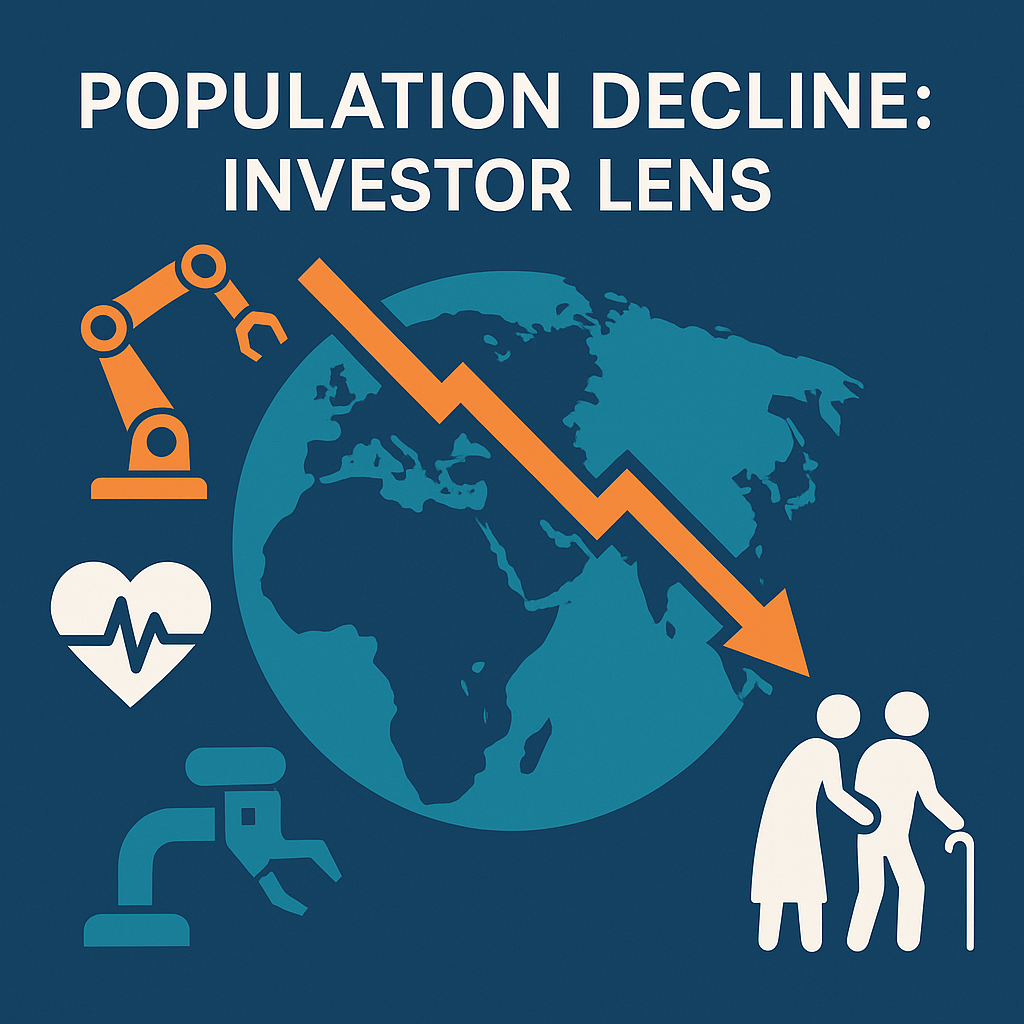
Over the past five decades, the world has experienced a significant demographic shift. The global fertility rate (TFR) has declined sharply, dropping from approximately 3.0 in 1970 to around 2.4 today. This decline below the replacement level of 2.1 signals a slowing or shrinking population in many regions.
Meanwhile, the share of seniors (65+) is set to rise dramatically. By 2050, in numerous advanced economies such as Japan, Italy, and Russia, seniors will constitute over 25% of the population—posing implications for healthcare, social services, and economic productivity.
1.2 Countries Facing High Population Contraction Risks
Certain nations are poised for significant population declines:
Table
1.3 Demographic Expansion Zones
Contrasting these contraction zones, some countries are experiencing robust growth:
Table
2. India’s Demographic Balancing Act
Key Trends:
- Fertility Decline: India’s Total Fertility Rate (TFR) has fallen from 2.3 in 2016 to approximately 1.9 today, with urban areas nearing 1.6–1.7—below replacement levels.
- Aging Population: The cohort aged 60+ will more than double from about 153 million in 2024 to roughly 347 million in 2050, accounting for nearly 21% of the population.
- Demographic Window: India’s working-age population (15–59) will peak in the late 2030s before declining, which will increase economic dependency ratios.
Implications for India:
Shifting from reliance solely on headcount growth, India must focus on boosting productivity, healthcare infrastructure, and lifelong skills development to sustain economic growth in the face of demographic shifts.
3. Sector-by-Sector Impact in India (2025–35)
- Healthcare & Diagnostics: Demand will surge due to increasing chronic illnesses and medical tourism.
- Life & Pension Insurance: Coverage gaps persist; private savings need to expand.
- Automation & Industrial AI: Wage inflation and capex trends push factories toward automation.
- Pharma & Med-Tech: Domestic needs and global supply chain reshuffles will increase demand.
- Ed-Tech & Staffing: Workforce upskilling and gig economy models will flourish.
- Silver Economy: Seniors with more disposable income will drive leisure, wellness, and luxury spending.
- Green Energy: Renewable energy targets and policies will catalyze growth.
- Real Estate: Urbanization offsets fertility decline, though starter-home demand in metros may slow.
- Child FMCG: Growth decelerates in low-TFR states, reflecting demographic aging.
4. Policy Levers & Innovation Wildcards
Key drivers and winners:
- Digital health initiatives like Ayushman Bharat will boost hospitals, diagnostics, and e-pharmacies.
- PLI schemes for med-tech and renewables will benefit domestic OEMs.
- Skill development reforms will propel ed-tech platforms and staffing firms.
- REIT structures could unlock value in hospitality and senior housing sectors.
5. Portfolio Playbook (Next 10 Years)
Table
Table
Investments should adhere to quality criteria: ROCE ≥ 15%, Debt/Equity < 1, positive free cash flow, and ≥ 40% of revenue linked to aging or automation themes.
6. Key Takeaways
- Dynamic Demography: India must evolve from a “dividend” to a “balanced growth” approach emphasizing productivity.
- Silver Wallet Opportunity: Seniors will command a larger share of disposable income by 2035, boosting healthcare, insurance, and leisure sectors.
- Tech & Training: Automation and lifelong skills will be pivotal in labor market resilience.
- Regional Nuance: State-level TFR variations (1.5–2.2) necessitate tailored investment strategies across different geographies and sectors.
Disclaimer
This content is for educational purposes only. It is not investment advice. Please conduct your own research and consult with professionals before making financial decisions.
This content is for educational purposes only. It is not investment advice. Please conduct your own research and consult with professionals before making financial decisions.



.jpg)


